Showing posts with label Technology. Show all posts

Saturday, March 12, 2016

Weekly poll: Xiaomi Mi 5 vs. Sony Xperia X Performance

Xiaomi traditionally serves the Asian market, but there's talk that the new Xiaomi Mi 5 will be its first phone to officially launch internationally. Sony, meanwhile, said the Xperia X Performance will definitely launch in Asia while its European availability is still being sussed out.
Both phones stick to the 5" 1080p format (the Mi 5 is 5.15", but close enough). They bring powerful Snapdragon 820 chipsets and a heavy focus on camera - 16MP OIS for the Xiaomi, 23MP for the Sony.
The Xperia X Performance is waterproof (only one in the current X lineup) and features Sony's traditional front-facing stereo speakers. This model has an option for a beautiful brushed metal back.
The Xiaomi Mi 5 comes with a glass/metal build as standard, but the premium Pro model will use ceramics and have a roomy 128GB storage option (there's no microSD slot here).
Both companies stepped up their design game, but spotty availability may hamper their growth. Still, if it was available in your region which one would you pick - the Xiaomi Mi 5 or the Sony Xperia X Performance?
Share:

Weekend poll: LG G5 vs. Samsung Galaxy S7 edge

If you think about it, Samsung and LG are to "blame" for the current dominance of huge-screen handsets. Samsung got the ball rolling with the Note, LG killed off the phone/phablet distinction with the G3.
This year, however, both companies pulled back and their new flagships are smaller than their predecessors: from 5.7" S6 edge+ to 5.5" S7 edge, from 5.5" G4 to 5.3" LG G5. Their screens have another thing in common too, Always On mode.
The two diverge when it comes to the camera. The G5 has a secondary wide-angle camera while Samsung focused on low-light shooting and ultra-fast focus locks.
The Galaxy S7 edge is not nearly as locked down as the S6 before it. No, you still can't change the battery, but you get your microSD slot back and water resistance too (IP68).
The LG G5 went all metal and LG used a unique process to hide the unsightly antenna lines. The killer feature, however, is modularity - currently, a camera battery grip (with extra hardware controls) and a hi-fi DAC from Bang & Olufsen give you the option to upgrade your G5 even after purchasing it.
Well, you've probably read our thoughts on the LG G5 vs. Samsung Galaxy S7 edge, now we want to hear what you think. Vote away!
Share:

Samsung reportedly manufacturing 17.2 million S7 units before April

The highly anticipated Galaxy S7 and S7 edge are expecting to break last year’s initial number of Galaxy S6 units in the first three months following its announcement.
A Korean media outlet reports that Samsung is preparing to manufacturer a total of 17.2 million Galaxy S7 and Galaxy S7 edge units by April of this year.
Samsung is really hoping to break its previous record set by the Galaxy S6 and S6 edge which sold roughly 15.8 million units in its first three months after launch with the second most successful device title held by the Galaxy S4 selling just over 15.2 million units in its initial sale period.
Also, the company has reportedly changed its ratio of S7 and S7 edge where the S6 was manufactured 4:1 with the S6 edge constantly in short supply. This time around, Samsung wants to use a 6:4 ratio since it was not able to predict the roaring demand that the S6 edge had last year.
Samsung hopes the overwhelming reception to the Galaxy S7’s announcement this year at MWC is indication to the S7 and S7 edge’s success and should break the S6’s record for the first three months of sales.
Share:

OmniVision has a new 13MP PureCel Plus-S sensor

OmniVison might not be a household brand name, but chances are you might have used a device equipped with one of its 8MP sensors at one time or another, it is a popular selfie shooter choice. The company is also behind the camera equipment used in Google's spatial mapping project Tango, so the expertise is definitely there.

The manufacturer's latest addition to the sensor lineup is the OV13870, as already mentioned a 13MP sensor. This might not sound all that impressive in terms of resolution, but the reality is that on mobile, manufacturers have started focusing a lot more on expanding the size of sensor pixels to improve overall quality and OmniVision is following to the trend.

The OV13870 has a new 1.25-micron PureCel®Plus-S pixel architecture. It is said to deliver best-in-class performance with major improvements to low-light photography and reduction is crosstalk. All this is packaged within a relatively small module, maintaining an optical format of 1/2.6-inches and a total height of 5.2mm, ideal for thin smartphones. It also has dual camera compatibility, which is perfect for use in multiple aperture setups like the one on the LG G5 for example.
On the specs side of things, the OV13870 can capture 13MP still at a rate of 45 fps and is also capable of ultra-high resolution 4K2K video at 60 FPS, 1080p full high definition (HD) at 240 FPS, or 720p HD at 300 FPS with binning and cropping.
OmniVision says the OV13870 is currently available for sampling and should enter mass production in Q2 2016.
Share:

Galaxy S7 and S7 edge won't have front Samsung logo in South Korea and China

Samsung announced it's latest flagships - the Galaxy S7 and S7 edge - at the just concluded Mobile World Congress. Set to go on sale next month, the devices will be available in 60 countries in the first wave of their global launch.
However, it has now come to light that some regions will see slightly different looking Galaxy S7/S7 edge units - the difference is in terms of the front Samsung logo, which appears to be missing in the Chinese and South Korean variants of the handsets.
South Korean variant on left • Chinese variant on right
There's currently no information on exactly what's the reason behind the move, although reports say it could be related to how "simplified and elegant" the devices look sans the front logo as well as the customer feedback Samsung received through its surveys in these regions.
Also worth mentioning here is that this is not the first time the South Korean tech giant has done something like this - back in April last year, the company dropped its logo from the Japanese Galaxy S6 and S6 edge units.
Share:

LG G5 to launch in India in the next quarter

LG has announced that it will be releasing the G5 in India in the next quarter.
Speaking about the device, Mr Amit Gujral, Marketing Head – Mobiles, LG India, said “We are really happy to see all the positivity around the LG G5 ever since its global unveil at the MWC. In fact, in a survey conducted in Korea the LG G5 topped consumer preference leaving its closest competitors trailing far behind. We hope to make this available to users in India very soon and are optimistic that consumers will love its revolutionary design and features.”
The G5 is the company's latest flagship smartphone with a unique modular design that allows the users to swap out the bottom portion for a camera grip with an extended battery or a H-Fi DAC and amplifier with B&O Play. It also features two cameras at the back, one with a particularly wide-angle lens.
More details about the launch will be released at a later date.
Share:

New 4-inch Apple device now rumored to be called iPhone SE

March is only a few days away now, and that means we're ever closer to Apple's much rumored spring event during which a new 4-inch iPhone is set to become official. Alleged details about this handset have been leaking for a long time, but perhaps the most disputed aspect of it has intriguingly been the name.
We've so far heard it could be called iPhone 7c, or the iPhone 6c, or the iPhone 5se. And today a new report claims it will be none of those. Instead, Apple is likely to choose to call it iPhone SE. "SE" will apparently stand for "special edition", if the unnamed sources behind this one are to be believed.

If this is true, then it will be interesting to see what a possible successor to the iPhone SE will be called, if there will ever be one. iPhone SE2? iPhone SEs? The New iPhone SE? It's anyone's guess at this point.
Anyway, the iPhone SE's pricing will match that of the iPhone 5s (pictured above), it's been revealed. It will look identical to that handset, except for slightly curved edges around its sides. It will come with the A9 chipset, an "upgraded" 8 MP main camera, NFC and Apple Pay support, as well as the latest Bluetooth, Wi-Fi, and LTE radios. It will be offered with either 16 or 64GB of storage.
Apple's event during which the iPhone SE will be announced might take place on March 15 orMarch 22, according to some contradictory rumors we've heard. In either case, it's availability should follow mere days after the unveiling. A new 9.7-inch iPad Pro will be revealed on the same occasion.
Share:

Sprint decided to bring back the 2 year contract, but why?

The American wireless industry has been phasing out the traditional 2 year contract in light of phones coming out more frequently and customers becoming disgruntled at being stuck with a 1-2 year old phone until next year.
Sprint hasn’t been doing particularly well in the past few years and continues to lose customers to other carriers. Since then they’ve been downsizing and cutting costs anywhere they could, they even removed Sprint’s own in-house repair centers from several stores in the beginning of the month. Sprint also gave store employees more cleaning duties to cut store maintenance costs.
The other 3 major carriers have already gotten rid of new 2 year contracts (unless you have a grandfathered 2 year agreement, you’d still have the option of renewing), so why did Sprint decide to bring back the 2 year contract?
Perhaps Sprint is in desperate need of customers that it needs to sell service to every customer it possibly can. The older generation of customers might still be oriented with a 2 year contract. Here's what I mean:
The customer is attracted to the idea of slapping down one or two-hundred dollars and walking home with a brand new phone that he or she now owns (with the only caveat being that they were obligated to fulfill this contract for 24 months).
The thing is, a 2 year contract for 1GB of data is $65.00 plus taxes and regulatory fees while a 24 month finance plan with the same amount of data is $64.34, plus taxes and fees (a difference of just 66 cents). The advantage of one over the other is one keeps you stuck with a phone while the other allows you to switch phones after 12 monthly payments.
Maybe this group of customers is scared off when finding out their financed phone will cost six to seven-hundred dollars (total amount paid after 24 months) and are too stubborn to understand how a lease or financing program will benefit them, or let them switch phones more often, than a 2 year commitment.
Maybe I’m totally off. Maybe it’s a stubborn executive that wants to bring back the 2 year contract.
For the American wireless industry and competition’s sake, let’s hope Sprint can turn it around and take it back to the good ol’ days of 2010-2011 when Sprint launched the first 4G WiMax network in the world and thrived with phones like the Samsung Moment and the HTC EVO 4Gwas Sprint’s thriving star.
Share:

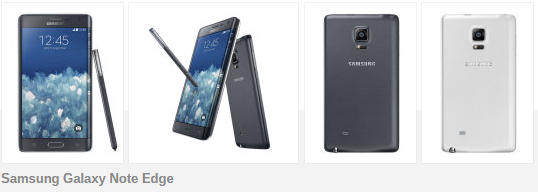
Samsung Galaxy Note Edge review

Experiments are great but it takes manufacturing prowess to follow them all the way to the retail shelves. Samsung have it - no surprise there - and they pulled it off, bringing the Galaxy Note Edge to stores. Never mind that curved screen looks like a concept. The Galaxy Note 4, which was used as a base, will otherwise continue to offer the flagship experience, sans the experimental features.
The Galaxy Note Edge features a 5.6" QHD+ screen - a little smaller than the Galaxy Note 4 screen up front, but with 160px worth of an added strip on the right side of the device. This "Edge screen" is subtly curved outwards but connected with the main screen - in fact, they are one piece in terms of hardware, though the software handles them separately for added functionality.
We'll discuss the software additions in detail, as for the basics you're basically looking at a Galaxy Note 4 with a Snapdragon 805 chipset - this includes everything from the S Pen stylus to the heart rate and SpO2 sensors.

Key features

  • 5.6" 16M-color QHD+ Super AMOLED capacitive touchscreen with curved Gorilla Glass 3
  • Curved Edge display for extra content, features
  • Android OS v4.4 KitKat with TouchWiz UI
  • Quad-core 2.7GHz Krait 450 CPU, Adreno 420 GPU; Qualcomm Snapdragon 805 chipset
  • 3GB of RAM
  • 16MP OIS camera with 2160p video recording @ 30fps, 1080p @ 60fps, 720p @ 120fps
  • 3.7MP front-facing camera, 1440p video recording
  • • 32/64GB of built-in storage; microSD card slot
  • S Pen stylus
  • Enhanced Multi-window multitasking support
  • Fingerprint scanner with PayPal support and private mode access
  • LTE Cat. 6 (300Mbps), Wi-Fi a/b/g/n/ac, GPS/GLONASS/Beidu receiver, Bluetooth v4.1+LE, ANT+, NFC
  • NFC
  • IR port for remote control functionality
  • Standard 3.5mm audio jack
  • Accelerometer and proximity sensor
  • Heart-rate monitor, SpO2 sensor
  • Active noise cancellation with a dedicated mic
  • 3,000mAh battery

Main disadvantages

  • Edge display better suited for right-handed users
  • Rear-mounted mono speaker
  • The uneven gap between the metal frame and curved screen glass takes a few points away from an otherwise excellent build
  • No enhanced resistance to liquids or dust
  • Wireless charging support only enabled by an optional back cover
Samsung's previous device with a bent screen, the Galaxy Round, was a high-end phablet in its own right but the added value of the arched screen was questionable. The Galaxy Note Edge seems to have more purpose and steps on the recognizable giant shoulders of the Galaxy Note 4, instead of building user awareness from scratch.
The Edge screen is used by the TouchWiz software to display at-a-glance info and offer various shortcuts. You can flip between multiple panels with a swipe and they offer a new multitasking experience on Android. The Edge screen boosts the user experience in compatible apps too: being on the side it can act as side-mounted buttons, like a shutter key for the camera or playback controls for the video player. This leaves the main screen fully dedicated to displaying content.
The Samsung Galaxy Note Edge seems like an odd device, but so did the Galaxy Note and, in retrospect, a lot of its features make sense. Will we look back at the Edge as "the one that started it all?" With multiple companies pursuing bendable displays, this may just be the first step to a flexible future. For now we'll stick to examining the Galaxy Note Edge in the present.
Share:

Nokia Lumia 830 review

Nokia Lumia 830 is probably the last smartphone to wear the iconic Nokia logo, five letters with so much history behind. And while it might not be a model as iconic as the original 808 PureView or the Lumia 1020, the Nokia Lumia 830 is destined to go down in history as the end of an era. But let's not write it off just yet, the Lumia 830 is still in the beginning of its journey.
Riding the current wave of smartphones with thin metal frames, this colorful baby comes up with a vivid screen, a PureView camera and a snappy chipset behind an even snappier Windows Phone.
Microsoft has put some serious thought when designing the new Nokia Lumia 830 and you can tell this from the first glimpse - it's a gorgeously looking phone with solid build. The flagship-worthy design incorporates a metal frame, a 2.5D screen glass, exchangeable rear covers in various colors, an OIS-enabled rear camera highlighted with a black glass. The PureView sensor is a key selling point, of course, with 10MP resolution, ZEISS lens and optical image stabilization.
But there is more - the Lumia 830 is up to date with wireless charging support out of the box, LTE connectivity, NFC, it even supports 128GB microSD memory cards. Nokia Lumia 830 is among the first devices to run natively on the Windows Phone 8.1 Update 1 OS with the latest Lumia Denim enhancements. And don't forget this all-round package is mid-range price!

Key features

  • 5" ClearBlack IPS display of 720p resolution, Gorilla Glass 3
  • 1.2 GHz quad-core Cortex-A7 CPU, Adreno 305 GPU, Snapdragon 400 chipset, 1GB of RAM
  • Windows Phone 8.1 OS Update 1 with Lumia Denim
  • 10MP PureView camera with 1080p@30fps video recording, Carl Zeiss optics, optical image stabilization
  • 0.9MP front-facing camera with 720p video recording
  • 16GB of inbuilt storage, microSD card slot up to 128GB
  • Free offline lifetime voice-guided navigation worldwide with Drive+
  • 15GB of free OneDrive storage
  • FM Radio
  • Wireless charging
  • Aluminum frame
  • Li-Ion 2,200 mAh battery

Main disadvantages

  • Snapdragon 400 chipset is somewhat dated now
  • No headset included in the box (neither in Europe, nor in the US)
There is very little the Nokia Lumia 830 got wrong. While the Snapdragon 400 chipset delivers a so-so performance on Android smartphones, we already know the lightweight Windows Phone will chug along happily on that sort of hardware. But we'll get into that in a bit.

But let's not make the Lumia 830 wait any longer. It's time get it through our traditional hands-on treatment and proceed with the hardware checkup shortly after.
Share:

Lenovo Vibe X2 review

The Motorola acquisition will put even more wind in the sail of outward bound Lenovo but blockbuster smartphones carrying their own brand are needed just as much, both at home in China and internationally. The QHD Vibe Z2 Pro is undoubtedly the top-of-the range offering, but what about the midrange? The Lenovo Vibe X2 reporting for duty.
The Vibe X2 looks stunning in its layered magnesium alloy body and that's exactly the impression Lenovo was after. It's hard to get noticed in this particular segment of the market, but the Vibe X2 has nothing to worry about. The layered design of the Vibe X2 is not unlike the Jolla phone, but there's an extra layer, for a total of three, whose different colors complement each other nicely.
Underneath the flashy outfit, the Vibe X2 offers equally impressive innards. We are talking one of MediaTek's latest True8core chipsets, where four of the CPU cores are 2GHZ Cortex-A17s. The Vibe X2 offers a solid 5" IPS display of 1080p resolution too. Complete with the 13MP camera at the back, the Vibe X2 is tiptoeing close to premium territory.
But Chinese phone makers are known for offering more than the usual for the price bracket. Let's see what the Vibe X2 has to say about it.

Key features

  • 5.0" 16M-color 1080p IPS LCD capacitive touchscreen
  • Android OS v4.4 KitKat with Vibe UI 2.0
  • Quad-core 2.0GHz Cortex-A17 and quad-core 1.7GHz Cortex-A7; MediatTek MT6595m True8Core, PowerVR G600 GPU
  • 2GB of RAM
  • 13MP camera with 1080p video recording @ 30fps
  • 5MP front-facing camera, 1080p video recording
  • 32GB of built-in storage
  • LTE Cat. 4 (150Mbps), Wi-Fi a/b/g/n/ac, GPS/GLONASS receiver, Bluetooth v4.1+LE, FM Radio
  • Standard 3.5mm audio jack
  • Accelerometer and proximity sensor, notification LED
  • Active noise cancellation with a dedicated mic
  • 2,300mAh battery

Main disadvantages

  • No microSD
  • No NFC
  • Front camera is fixed focus
  • No 64GB option
  • No 4K video recording although the chipset supports it
  • A bit pricey
  • Non-removable battery
The only other phone to be powered by this particular MediaTek chipset is the Meizu MX4. Fortunately, unlike most of its compatriots, the Lenovo Vibe X2 is more readily available outside its home market.
Riding on charm alone won't take the Vibe X2 too far and Lenovo certainly knows it. The Vibe X2 needs to click with customers on a deeper level and that's always easier said than done. At least on paper though, the phone is more than adequately powered, with things like Cat.4 LTE and 2 gigs of RAM boosting its credentials with users who value performance over looks. The option to layer on accessories is a welcome touch of novelty.

Coming up next is the usual unboxing and hardware checkup. We'll take the Lenovo Vibe X2 out of the box and see if the handling is as good as the looks. And that's just for starters. Let's go.
Share:

Samsung Galaxy Core Prime review

The Galaxy Core lineup represents Samsung's take on the essential smartphone. The Galaxy Core Prime updates the base formula in two areas - a slightly better camera and slightly better chipset - and it serves as a smaller alternative to Galaxy Grand Prime.
The Core Prime was announced mere months after Galaxy Core II (not to mention Core LTE, Core Lite LTE and several others), but brings definite improvements over all members of the family, even if most specs are shared among the Cores.
For one, the 64-bit capable Snapdragon 410 is definitely a first. The 5MP/720p camera has been done on other Cores, but it is still the best in the lineup. The front-facing camera is the best one yet - a 2MP/480p shooter - that goes over the low bar of having no selfie camera at all or a 1MP one. It defiantly lacks the ambition of the Galaxy Grand Prime's selfie camera but it's also not very ambition when it comes to pricing so it all sounds fair.

Key features

  • Optional Dual SIM version available
  • 4.5" 480 x 800 TFT display with 207ppi
  • Android OS v4.4 KitKat with TouchWiz UI
  • Quad-core 1.2 GHz Cortex-A53 processor, Adreno 306 GPU, 1GB of RAM, Snapdragon 410 chipset
  • 8GB built-in storage, microSD card slot
  • 5MP camera with LED flash, 720p video recording; 2MP front-facing camera
  • Cat. 4 LTE (150/50Mbps); Wi-Fi b/g/n; Bluetooth 4.0; NFC; GPS; microUSB, FM radio
  • 2,000mAh battery

Main disadvantages

  • Screen ppi is entry-level
  • No screen protection glass
  • No automatic brightness sensor
Coming off our Galaxy Grand Prime review, we know that a lot of the 64-bit benefits hang on an Android 5.0 Lollipop update. Considering the Core Prime was announced only recently, the prognosis on an update is good, but nothing is guaranteed.
The camera department is a definite update over the Galaxy Core II, where the 5MP snapper only recorded 480p video and there was a 480p front-facing camera. Three other Core models (Plus, LTE and Lite LTE) also shoot 720p video, but they all lack the Core Prime high quality selfie snapper.
Speaking of the Grand, in its review we discussed the recent popularity of large screens with low resolution. While in terms of pixel density the Galaxy Core Prime is in the same range, its entry-level position makes us more willing to forgive the sub-HD resolution and the lack of an IPS screen matrix.
True to its position in the market, the phone has a dual-SIM flavor. One version, the G360F, even reaches above its station with 4G LTE connectivity, but that's exclusive to China and Taiwan.
Share:

Nexus 6P vs. LG V10 vs. Galaxy Note5

Blind shootout reveal

Spoiler alert: the results of the voting are revealed below. It's not too late to check out the camera samples on the second page with an open mind and pick your favorite.
Thanks to everyone who voted on the blind shootout! We made it more difficult this time around by concealing the FoV of the different phones, but we saw some very accurate guesses in the comments.
Below you'll find the results of the voting and the full resolution shots we used for the comparison (without resizing to hide the FoV).
Let's start by unveiling the mystery phone. Many guessed "Xperia Z5" and were fairly close - it is a Sony camera, except not in a Sony phone. The fourth phone, D, in the blind shootout was the Meizu PRO 5.
The other three were as follows: A is the Samsung Galaxy Note5, B is the Huawei Nexus 6P and C is the LG V10. And of the three a very clear winner emerged, though it was actually the Meizu that snagged the first couple of victories

#1 and #2 - Best day time photo
The Meizu PRO 5 (D) snagged both of those with over 50% of the votes. The LG V10 (C) came second with around 38% of the votes (#1) and 31% (#2). The higher-resolution sensor, 21MP, captured plenty of detail in the well-lit conditions.

#3 - Best night time photo

The LG V10 (C) scores a decisive victory here with 74% of the votes. Here the relatively poor low-light performance of the Meizu dropped it to third place. The Huawei Nexus 6P (B) is a distant second with 19%.
The LG V10 comes with the widest aperture of the bunch, f/1.8, and finely tuned software. The Nexus 6P has the biggest pixels on its image sensor, 1.55µm, but poor processing let it down.

#4 - Best day time video

The LG V10 (C) maintains its lead with 62% of the votes, while the Meizu PRO 5 (D) got a respectable 30%. The other two, Galaxy Note 5 (A) and Nexus 6P (B) scored in the single digits. Note that the PRO 5 has a very narrow field of view, much more so than the others.
 

#5 - Best night time video

Shooting in the dark is LG V10's (C) thing and so is video. This vote got more contentious, but the V10 still won with 41%, while the Meizu PRO 5 (D) took second place with 29%.
The Huawei Nexus 6P (B) almost toppled it though, it was just a single percentage point behind at 28%. The Samsung Galaxy Note5 (A) uses very strong noise reduction, which made the image very soft at it landed it in last place.

That's it for the blind shootout, expect our full thoughts on the cameras of these four phones tomorrow. The full article will be pit the Nexus 6P, LG V10 and Galaxy Note5 against each other on multiple topics (screen, battery, performance) and the Meizu has a cameo in the camera section.
Share: